Follow the venue's timing before generic advice
Some venues publish submission windows, response expectations, or instructions not to follow up. Those rules outrank a universal schedule. Read the booking page and save the guidance in your tracker.
When no guidance exists, give the first message enough time to be reviewed. Around seven days is a practical starting point for many local venue pitches, but seasonal calendars and larger rooms may move more slowly.
Add information, not pressure
A useful follow-up may include newly opened dates, a stronger live clip, a relevant nearby booking, or a clarified setup detail. Do not manufacture an update. A simple, polite reminder is better than fake urgency.
Avoid guilt language such as "I have emailed several times" or "I need an answer." The venue may be busy, fully booked, or uncertain about fit. Your professionalism is part of the pitch.
Use a stop rule
Decide in advance how many attempts you will make and when the lead becomes inactive. Two concise follow-ups after the original pitch is often enough for a cold local lead unless the venue invites continued contact.
Stop immediately after a clear no, an unsubscribe request, or a direction not to follow up. A no today may still leave a professional impression for another season; ignoring boundaries will not.
Track the next date
The awkwardness of follow-up often comes from relying on memory. Save the original send date and next action in a tracker. When the follow-up is sent, update the status immediately.
If the venue says the calendar is full, ask when the next booking window opens and save that month. That turns a vague rejection into useful timing information without continuing to chase the same date.
Practical template
Copy-and-customize venue follow-up
Subject: Re: [Original subject line]
Hi [Name or Venue Team],
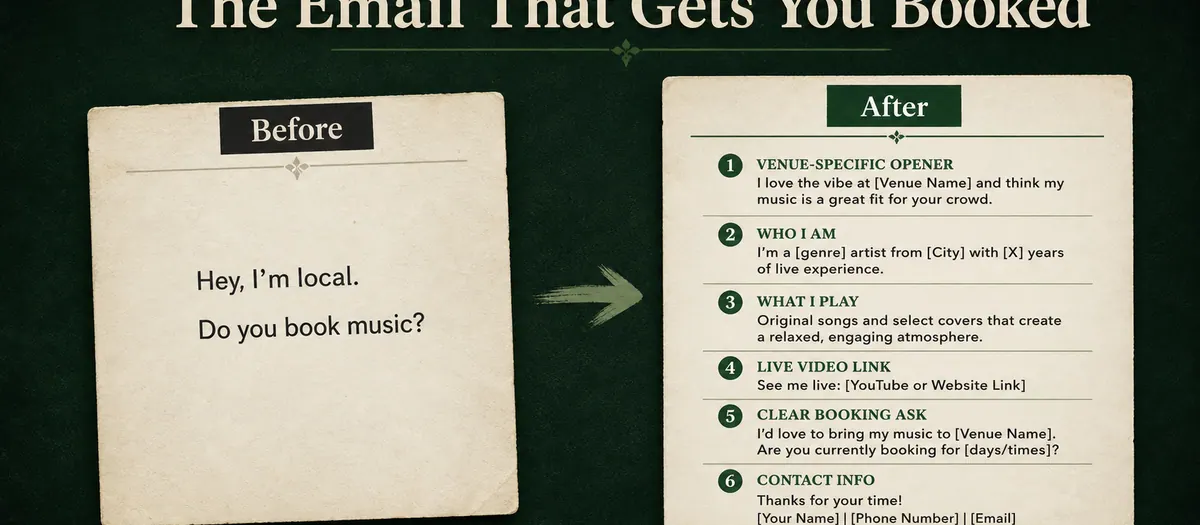
Following up on my note below about [Artist Name], a [location]-based [act format] playing [concise style or room experience]. I still think the act could fit [one real venue detail].
Here is the live clip again for convenience: [link]
Are you currently reviewing music for [month or season], or is there a better time for me to check back?
Thanks,
[Name] | [Artist Name]
Replace every bracketed field, confirm each fact, and edit the result into your own voice before sending.
Frequently asked questions
How many times should a musician follow up with a venue?
There is no universal number, but one or two respectful follow-ups after the original message is a useful default when the venue has not published different instructions.
Should I follow up by Instagram DM after emailing?
Use the channel the venue prefers. Switching channels can feel pushy when the only purpose is to force a reply. A DM is more appropriate when the venue lists it as the booking path.
What if the venue says the calendar is full?
Thank them and ask when they begin reviewing the next booking period. Record that timing and contact them once when the relevant window opens.
Build the complete system
Turn the advice into repeatable booking work.
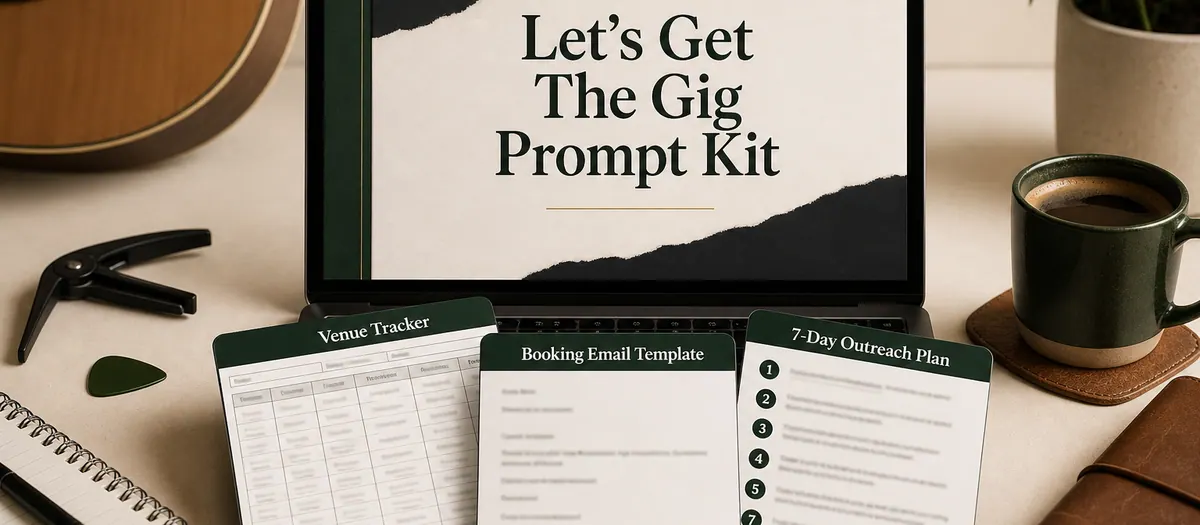
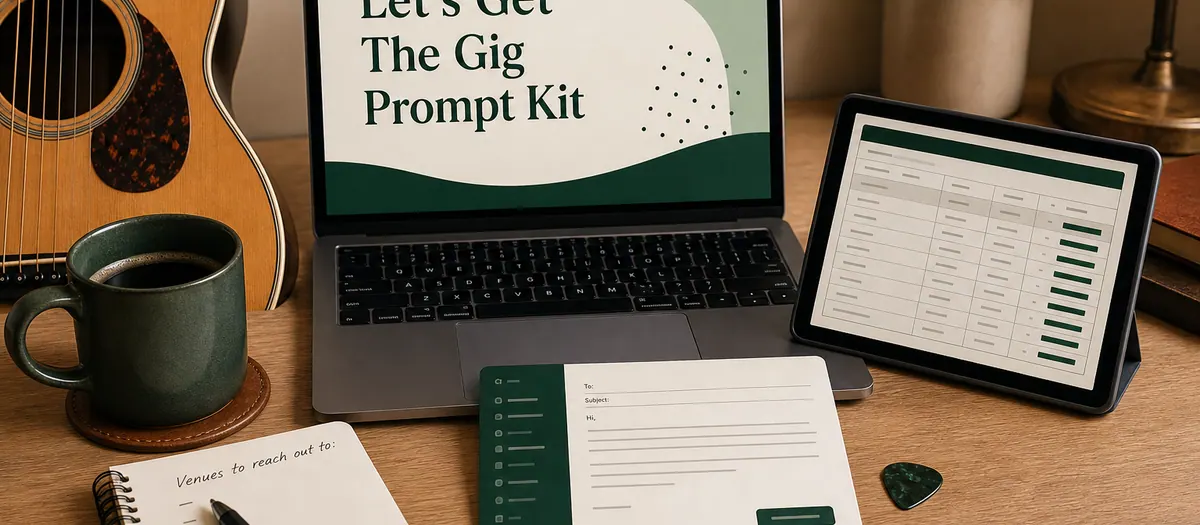
The Local Gig Booking Kit includes 18 guided prompts for artist positioning, venue research, booking emails, follow-up, tracking, replies, rates, and monthly resets.