Turn your act into a bookable offer
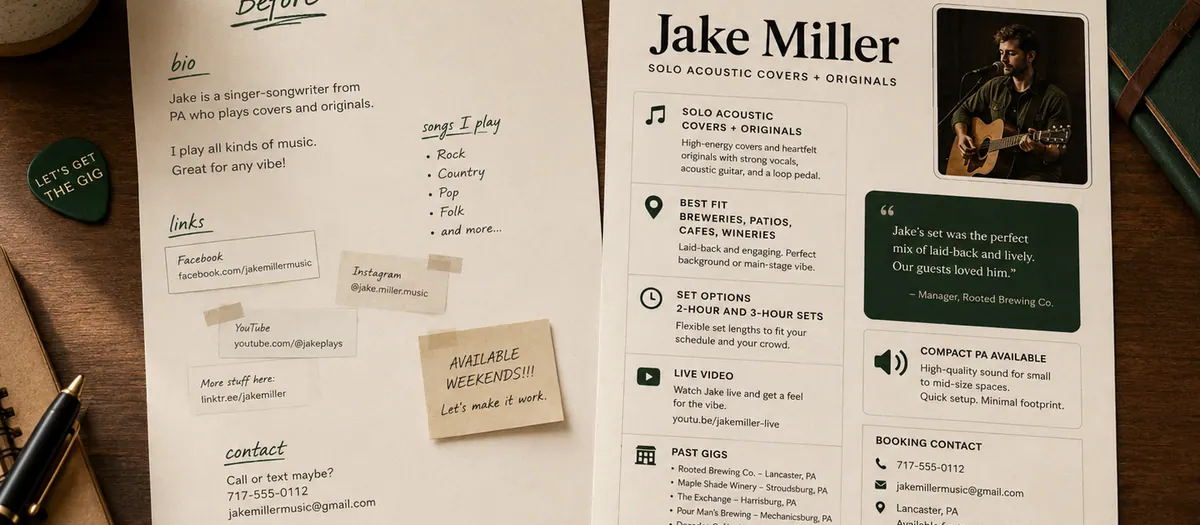
Before building a venue list, describe the actual experience you can deliver. A booker needs more than a genre label. State whether you are solo, duo, or full band; how long you can perform; how much space and volume you need; and what kind of atmosphere your set creates.
A useful offer might be a low-volume three-hour solo acoustic set for patios and tasting rooms, a high-energy cover duo for weekend breweries, or an original band suited to ticketed rooms. The clearer the offer, the easier it is to reject bad-fit venues before wasting outreach.
- Act size and basic footprint
- Typical set length and break structure
- Volume level and production needs
- Genre, repertoire, and audience atmosphere
- Travel radius and realistic availability
Research evidence of fit
Start with public evidence. Check the venue website, events calendar, social posts, tagged photos, and recent performer lineups. Look for recurring live-music nights, act configurations, genres, start times, and whether the room appears to host background music, featured entertainment, or ticketed shows.
Do not rely on a giant generic list. A smaller list of rooms with visible evidence of fit gives you better personalization and more useful data. Save the evidence in your tracker so your first message can mention something real.
Find the correct booking path
Use the submission method the venue asks for. Some businesses publish a booking form or music email. Others route everything through a manager or social account. If the path is unclear, a brief call or in-person question can help: "Who handles live music, and what is the best way for an artist to submit?"
Do not corner staff during a rush or pitch the bartender for ten minutes. Your goal is to learn the process and respect it. Record the contact name, channel, and any submission instructions in your tracker.
Pitch the room you researched
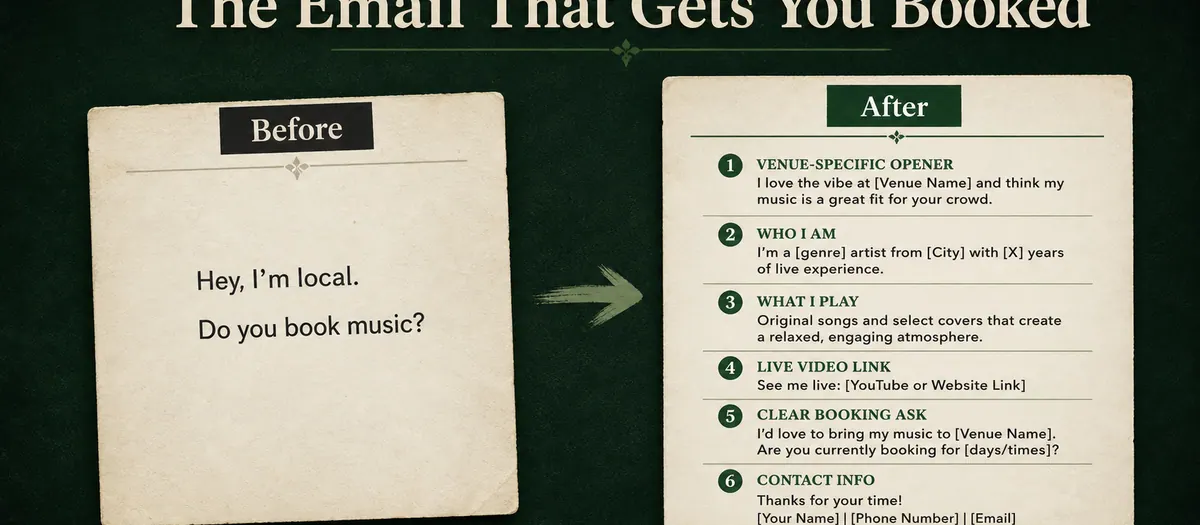
Use one sentence to connect your offer to the venue. Mention the patio series, acoustic nights, family-friendly afternoon sets, or similar acts you found. Then provide one live clip and one booking question.
Keep the same core artist details across messages, but change the fit line. That balance makes outreach repeatable without sounding like a mass blast. If a venue requests specific details such as rate, available dates, draw, or equipment, answer those directly.
Track the work like a pipeline
A venue list becomes a booking system only when every row has a status and next action. Track venue, contact, channel, fit evidence, date sent, response, next follow-up date, notes, and outcome.
Review the tracker weekly. Follow up with qualified rooms, stop when a venue says no or asks you not to contact them, and revisit seasonal opportunities when the timing changes. The tracker should reduce mental load, not become another project you avoid.
Build relationships after the first gig
The easiest next booking may come from performing the first one professionally. Confirm logistics, arrive prepared, communicate changes early, respect volume and timing, and make the venue's job easier.
After the gig, thank the contact and ask when they normally schedule the next season or month. Save notes about the room, crowd, and setup. A reliable rebooking relationship is often more valuable than constantly restarting with cold leads.
Frequently asked questions
Should I visit a bar or brewery before pitching?
It can help when practical. You can understand the room, volume, audience, and music format, but you should still use the venue's preferred booking process.
How far ahead do local venues book music?
It varies widely by room and season. Research the calendar and ask the booker. Track booking windows instead of assuming every venue schedules on the same timeline.
Do I need a large following to get local gigs?
Not every room books on draw alone. Restaurants, patios, breweries, and tasting rooms may care heavily about atmosphere, professionalism, set length, volume, reliability, and audience fit.
Build the complete system
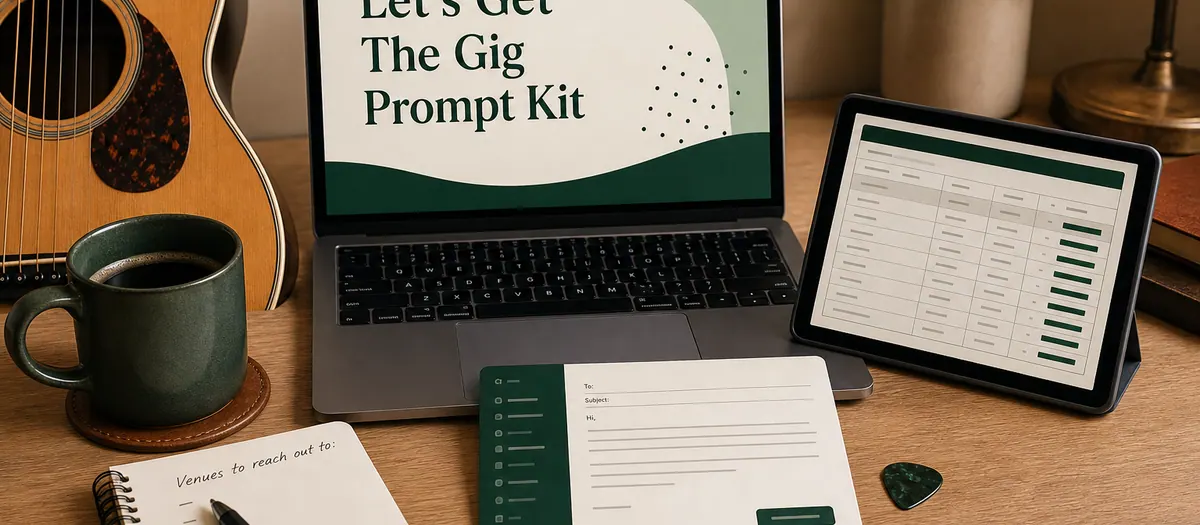
Turn the advice into repeatable booking work.
The Local Gig Booking Kit includes 18 guided prompts for artist positioning, venue research, booking emails, follow-up, tracking, replies, rates, and monthly resets.