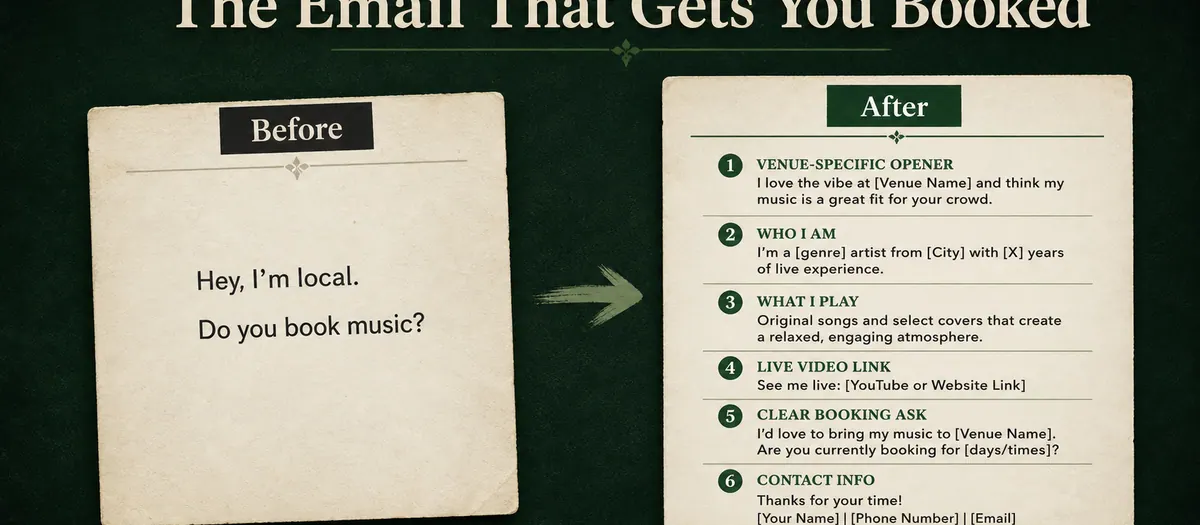
Lead with the live offer
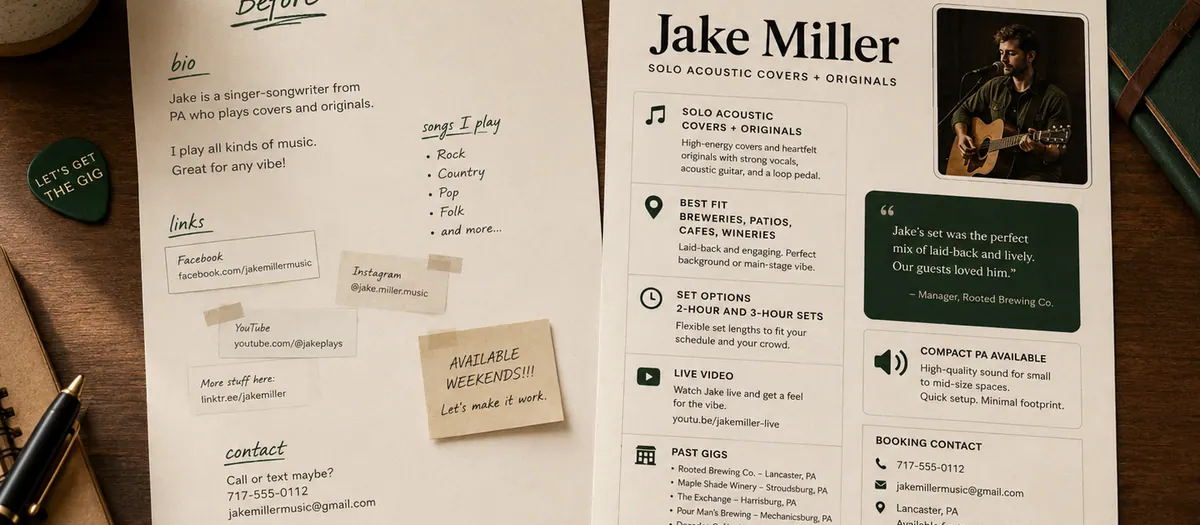
The top of the page should answer who you are, where you are based, what the act sounds like, and what kind of room experience you create. Include act size and a short fit statement before a long biography.
For local venue booking, practical clarity matters. A booker should not need to infer whether the link represents a solo acoustic set, a duo, or a full band.
- Artist or band name
- Location and realistic travel area
- Act configuration
- Concise genre and atmosphere
- Typical set length
- Best-fit venue types
Use live video that matches the offer
A cinematic music video can support your brand, but it may not prove the gig. Feature a clip where the act configuration, vocal, musicianship, setup, and room energy are easy to understand.
Choose quality over quantity. One strong embedded or clearly labeled live clip should appear near the top. Add a second only when it demonstrates a meaningfully different configuration or room type.
Write a booker-friendly bio
A venue bio should be concrete enough to help someone describe the act to a manager or audience. Start with sound, location, act format, and live experience. Use verifiable highlights when they matter.
Keep a short version of roughly 50 to 100 words and a medium version for pages that need more context. Remove vague claims such as "unforgettable" unless the page shows credible evidence.
Show useful proof
Proof may include recognizable rooms, repeat bookings, relevant festivals, testimonials with permission, audience photos, press, or a clear performance calendar. Newer artists can show honest past-gig evidence without pretending to have a long resume.
Do not overload the page with every show. Select evidence that helps the type of venue you are pitching understand reliability and fit.
Make contact and logistics obvious
Place one booking contact where it is easy to find. Include the preferred email or inquiry method, location, act size, and any essential setup summary. Keep detailed riders and stage plots available when the room needs them rather than forcing every cafe to open production documents.
Test every link on a phone. Confirm images load quickly, videos are public, downloadable files have useful names, and the page still works without an account or password.
Maintain the EPK
An outdated EPK creates uncertainty. Review it every month or after meaningful changes to the act. Replace expired dates, broken links, old photos, and clips that no longer represent the show.
Use one canonical EPK link in your booking email, social bio, and follow-up system. That makes updates easier because you improve one source instead of resending new attachments.
Frequently asked questions
Should a musician EPK be a PDF or a webpage?
A fast mobile-friendly webpage is usually easiest to keep current and share. A concise PDF can be useful when a venue requests one, but avoid sending large unsolicited attachments.
Do I need press coverage in my EPK?
No. Use the strongest truthful proof you have. Live video, repeat bookings, past rooms, clear photos, and reliable contact information can be more useful to a local booker.
How many songs should be in an EPK?
Include enough music to represent the act without creating decision fatigue. For venue outreach, one strong live video and a small selection of relevant tracks are often sufficient.
Build the complete system
Turn the advice into repeatable booking work.
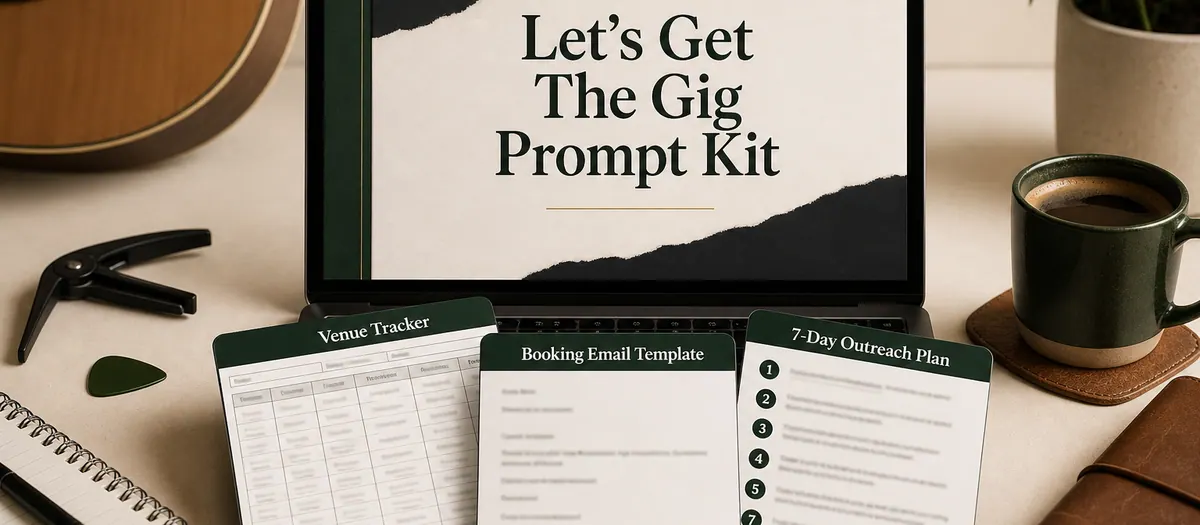
The Local Gig Booking Kit includes 18 guided prompts for artist positioning, venue research, booking emails, follow-up, tracking, replies, rates, and monthly resets.