Define the filter before collecting names
Write down the actual offer you are researching for: act size, location, travel radius, repertoire, set length, volume, footprint, availability, and the atmosphere you create. This prevents a generic search from filling the tracker with rooms you cannot or should not pitch.
Create separate filters when you sell different configurations. The right list for a solo acoustic weekday set may be very different from the right list for a full-band Saturday night.
- Home city and realistic travel radius
- Solo, duo, or full-band configuration
- Set length, breaks, and volume
- Genre, repertoire, and audience
- Preferred venue and event types
- Dates or seasons you can actually offer
Start with evidence-rich sources
Venue websites and public calendars show whether live music is current, recurring, and presented in a format that resembles your act. Social posts, tagged performer photos, community calendars, map listings, and other musicians' public schedules can reveal additional rooms.
One strong lead often produces several more. Review the calendars of comparable local artists, then evaluate each room independently instead of assuming every place they played is right for you.
Verify that the room is active and relevant
Before saving a lead, confirm the business still operates and has recent evidence of live music. Look for act size, genre, day and time, indoor or outdoor setting, ticketing, volume, and whether the music is background atmosphere or the featured event.
Save the source and a short fit note. Evidence such as recurring Sunday patio duos is more useful than a vague label such as good venue.
Find the preferred booking path
Use the method the venue publishes: booking form, music email, manager contact, event coordinator, social account, or in-person process. Record the source and any required materials.
When the path is unclear, ask one brief operational question at a calm time: who handles live music, and what is the preferred way to submit? Do not turn a busy service interaction into a full pitch.
Track fields that produce a next action
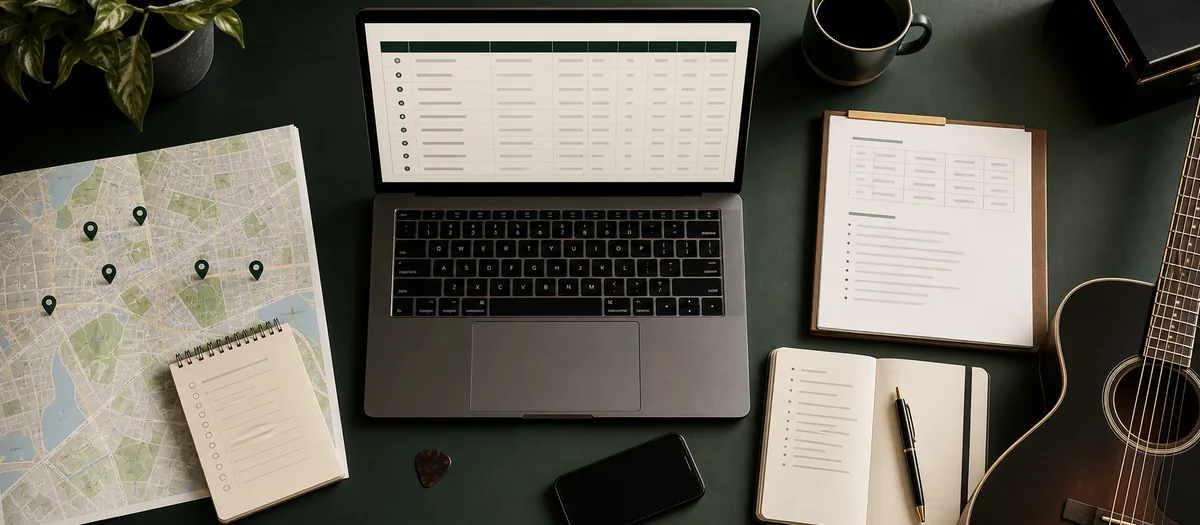
Every row should help you decide what happens next. Useful fields include venue, city, distance, room type, act-format evidence, contact, submission method, source URL, priority, last contact, response, next follow-up, and notes.
Use a small set of consistent statuses such as Researching, Ready to Pitch, Contacted, Follow Up, Conversation, Booked, Not Now, and Not a Fit. A tracker with dozens of vague statuses becomes difficult to maintain.
Prioritize fit over list size
Score leads on visible fit, contact clarity, location, timing, and whether your strongest live proof matches the room. Start outreach with the highest-confidence prospects and learn from their responses.
A list of 25 researched rooms is more useful than 500 scraped names. Small batches make personalization, tracking, and review manageable.
Maintain the list as a living asset
Update contact changes, booking windows, seasonal programming, closed venues, new locations, and the results of each conversation. Record why a room was not a fit so you do not research it again next month.
Review the list weekly while actively booking and monthly when outreach is lighter. Add new rooms deliberately, archive stale leads, and keep the next-action dates trustworthy.
Practical template
Starter columns for a musician venue tracker
Venue | City | Distance | Venue type | Fit evidence | Source URL
Booking contact | Preferred channel | Submission requirements
Priority | Status | Date contacted | Response
Next action | Follow-up date | Notes | Outcome
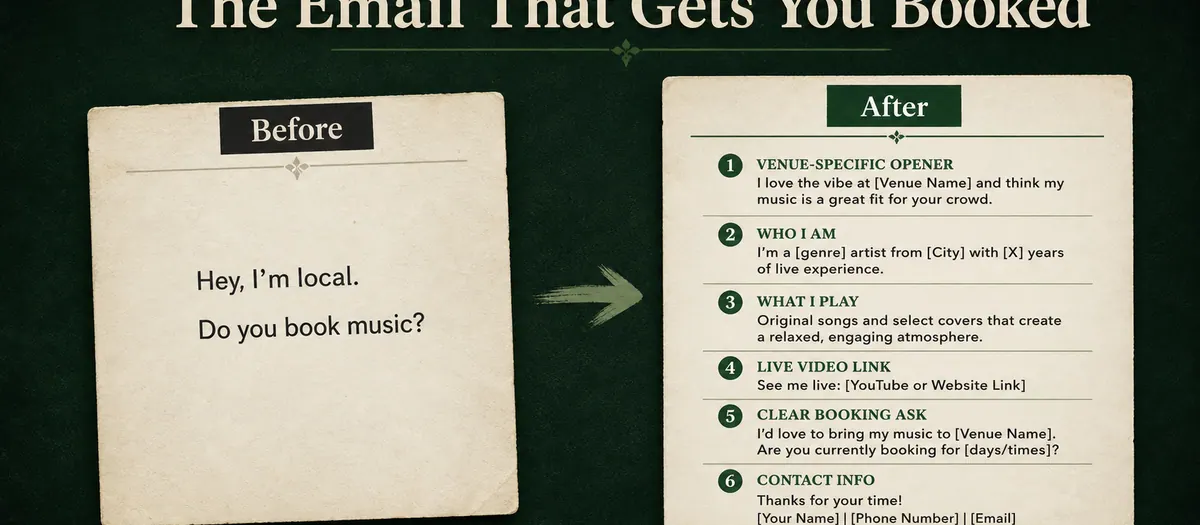
Replace every bracketed field, confirm each fact, and edit the result into your own voice before sending.
Frequently asked questions
How many venues should a musician put on a prospect list?
Start with a manageable group you can research and contact thoughtfully. Twenty to thirty qualified rooms can teach you more than hundreds of unverified names.
Can AI build a venue list for me?
AI can help organize research and compare criteria, but you must verify that every venue, contact, calendar, and booking policy is current before outreach.
Should I include venues that do not list a booking email?
Yes, when there is current evidence of fit. Research the preferred path or ask briefly who handles live music rather than guessing an address or repeatedly messaging unrelated staff.
Build the complete system
Turn the advice into repeatable booking work.
The Local Gig Booking Kit includes 18 guided prompts for artist positioning, venue research, booking emails, follow-up, tracking, replies, rates, and monthly resets.